
Narrow Results
Sanding Discs
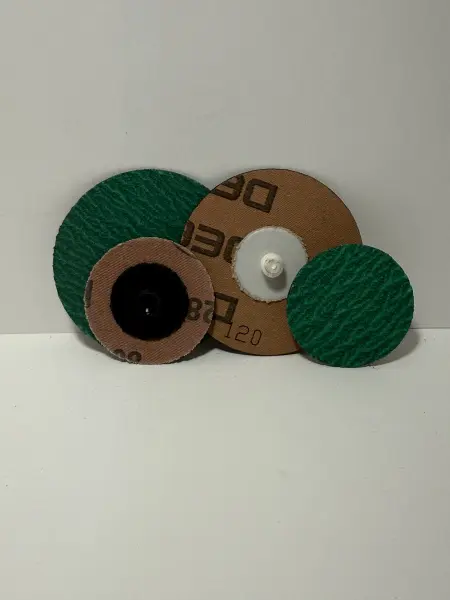
A sanding disc is an abrasive disc designed for grinding, blending, deburring, and surface preparation in tight spaces and hard-to-reach areas. Commonly used with right-angle die grinders and quick-change backing pads, 2" and 3" sanding discs provide fast material removal and precise control on a variety of metalworking applications. Available in grits ranging from 24 to 120, these discs can be used for everything from aggressive stock removal to final surface finishing.
DW Fastener is proud to offer a wide selection of high-quality 2" and 3" sanding discs from Bullard Abrasives, proudly made in the USA and engineered for durability and performance. Available in both Type R and Type S attachment styles, our sanding discs deliver secure attachment and quick disc changes to help maximize productivity. If you're unsure which sanding disc is right for your application or can't find what you're looking for, our sales team is ready to help at sales@dwfastener.com or 330-848-2891, option 2.
Type R
Type R sanding discs feature a roll-on locking system that allows for quick, secure attachment to compatible backing pads. Designed for fast disc changes and reliable performance, Type R discs are ideal for applications requiring frequent grit changes or high-volume production work.
Type S
Type S sanding discs use a screw-on attachment system for easy installation and removal. The low-profile design provides excellent stability and control, making Type S discs a popular choice for precision grinding, blending, and finishing applications.
Selecting the appropriate grit helps ensure the best balance of material removal and surface finish.
24–36 grit: Heavy stock removal, weld grinding, and aggressive material removal
40–60 grit: Deburring, edge preparation, and general-purpose grinding
80–120 grit: Surface blending, finishing, and preparing surfaces for coating or painting
The material being worked on can also impact performance. Ferrous metals, including steel, iron, and welds, benefit from abrasives designed to withstand higher heat and demanding applications. Non-ferrous metals, such as aluminum, brass, and copper, perform best with abrasives formulated to reduce loading and minimize material build-up.